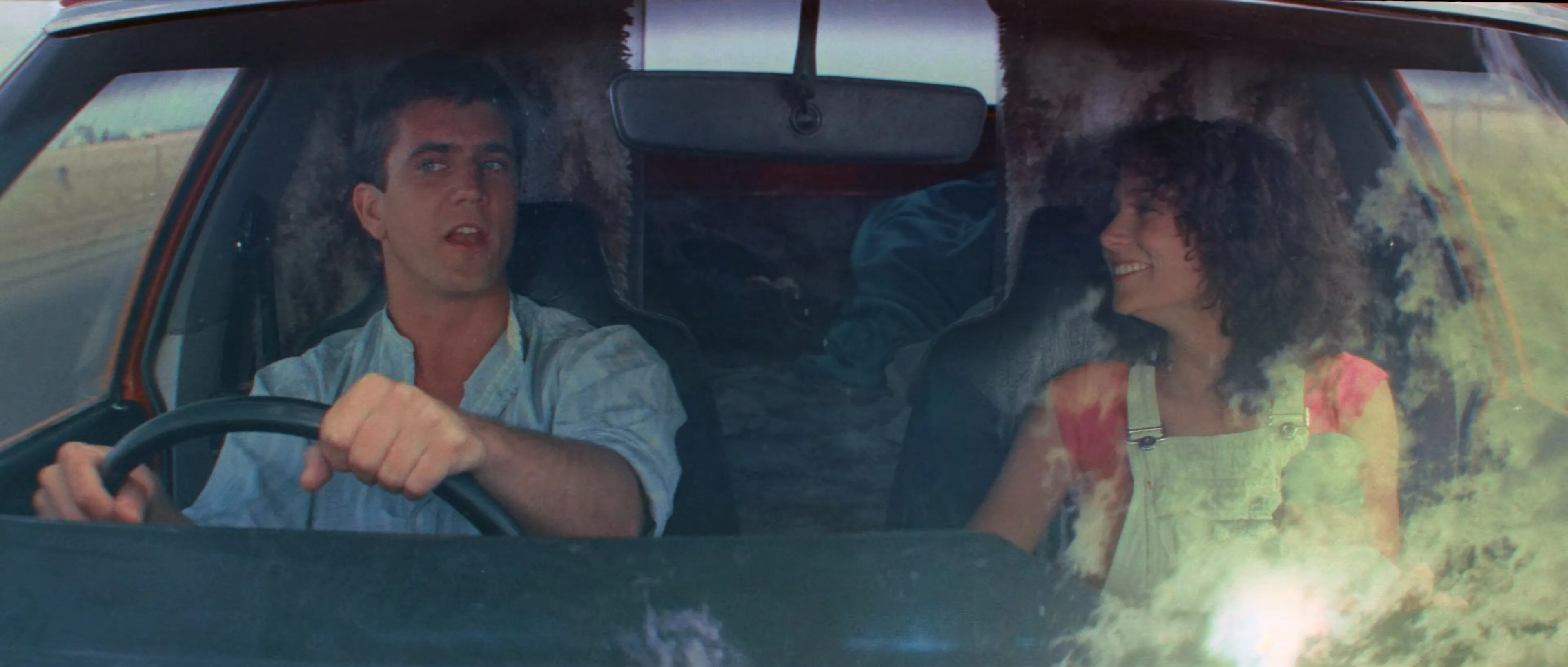
Max and Jessie — © 1979 Kennedy Miller Production.
George Miller's Mad Max from 1979 arrives not as a polished blockbuster but as a raw spark that would later ignite one of cinema's most enduring franchises. Made on a shoestring budget yet powered by ferocious intent, the film feels less like a conventional debut and more like an urgent warning.
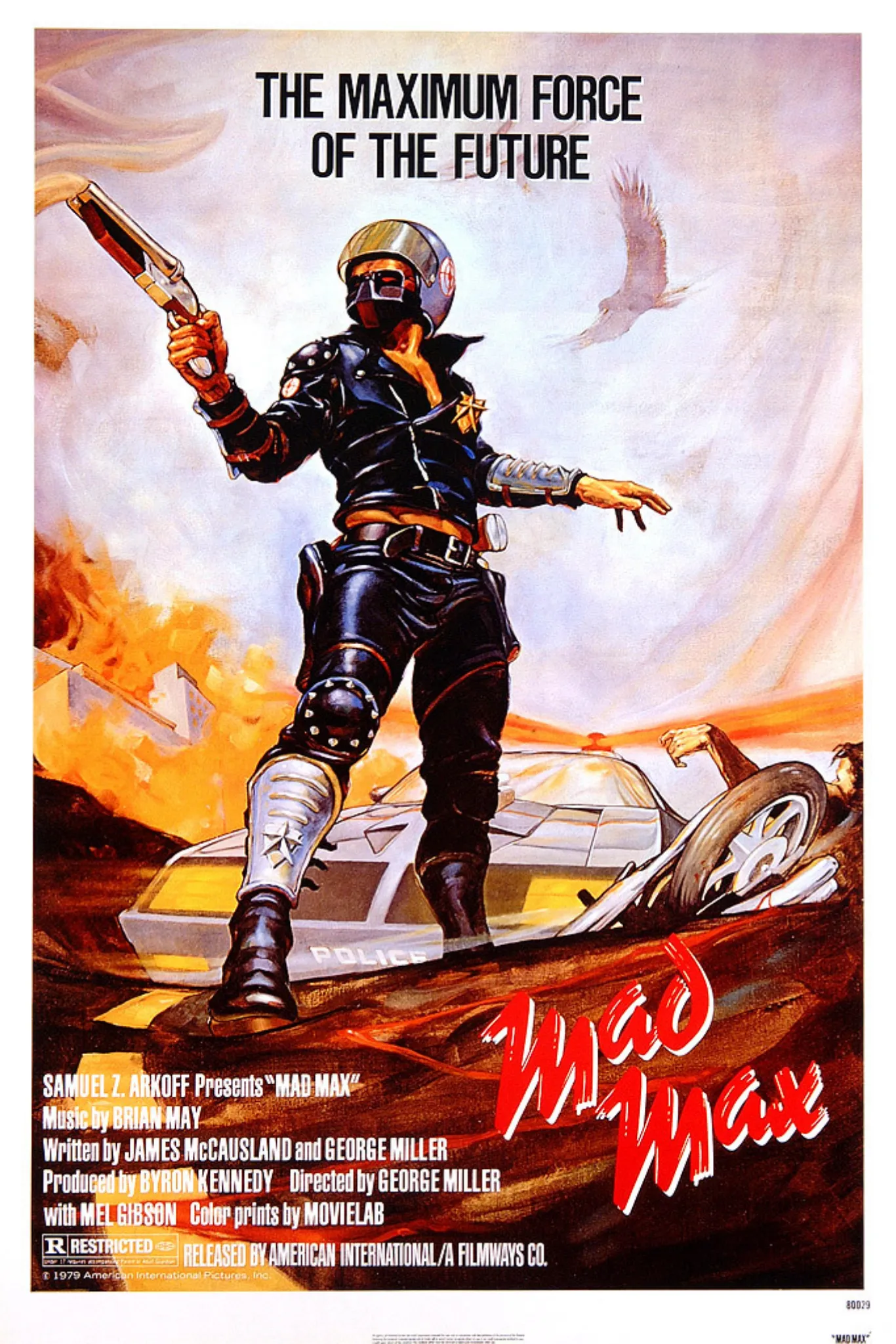
Mad Max
Release Year: 1979
Genre: Action, Adventure
Director: George Miller
IMDb: 6.8/10
Tomatometer: 89%
Popcornmeter: 70%
Australia is presented as a society already fraying at the edges, where the road has become a lawless artery and civilization is only a thin illusion clinging to asphalt.
A World on the Brink
Unlike its louder sequels, Mad Max begins in a recognizably grounded reality. Police still exist. Families still live in houses. Yet violence is no longer shocking. It is routine. Miller's vision of the near future is unsettling precisely because it feels plausible. The highways stretch endlessly, sun burned and unforgiving, while biker gangs roam like predators testing the limits of a weakening system. The film's tension comes from this slow realization that order is already lost, even if uniforms and badges remain.
Mel Gibson as a Reluctant Icon
Mel Gibson's Max Rockatansky is not the mythic road warrior audiences would later come to expect. Here, he is a man still tethered to normal life, a husband and father trying to balance duty with survival. Gibson plays him with restraint, allowing silence and physical presence to do much of the work. When Max finally breaks, it feels earned. The transformation is gradual, painful, and tragic rather than triumphant, making the character's descent far more haunting than heroic.
Romanticism Before the Ruin
At its heart, Mad Max is unexpectedly romantic. The life shared by Max Rockatansky, his wife Jessie, and their young son is portrayed with tenderness rarely associated with dystopian cinema. Sunlit beaches, playful laughter, simple domestic warmth, these moments feel almost sacred. Jessie represents more than a wife, she embodies the fragile hope that beauty and normalcy can survive at the edge of social decay. Their love is not grandiose, but intimate, lived-in, and painfully human.
Violence with Purpose
The film's violence is blunt and often uncomfortable, but it is never decorative. Each act of brutality pushes the story closer to its inevitable collapse. Miller frames action with a sense of speed and danger that feels genuinely reckless, aided by practical stunts that place bodies and machines in real jeopardy. Cars flip, metal screams, and the road itself seems hungry. There is a documentary roughness to these moments that modern digital effects rarely capture.
Low Budget Ingenuity
What Mad Max lacks in resources, it compensates for with creativity. Costumes are pieced together from leather scraps and fetish wear, giving the gangs an anarchic visual identity that would influence decades of post apocalyptic design. The score pulses with nervous energy, amplifying the film's sense of dread. Editing is sharp and aggressive, often cutting scenes short to maintain momentum, as if the film itself is afraid to slow down.
A Tragic Beginning, Not a Victory
At its core, Mad Max is not about rebellion or justice but about loss. The film ends not with hope, but with the chilling confirmation that something essential has been destroyed. Civilization does not collapse in one dramatic moment. It erodes through cruelty, indifference, and fear. Max survives, but survival is not presented as a win. It is simply what remains.
Legacy of a Rough Masterpiece
Seen today, Mad Max may feel rough around the edges, yet those edges are precisely what give it power. It is a film fueled by urgency, anger, and imagination, laying the groundwork for a saga that would grow more operatic with each installment. As an origin story for both a character and a cinematic universe, it stands as a stark reminder that great myths often begin in dirt, dust, and desperation.